Design guide
Postcard design that gets a response
A marketing postcard is read in about two seconds, standing over a recycling bin. Here's how to design one that survives that moment — the size, the layout, the postal rules — and how to skip the design work entirely with templates already built to spec.
The two-second rule
Every principle of postcard design follows from one fact: your reader decides whether to keep or toss the card in about two seconds. A postcard is not a brochure. It gets one job:
One headline. A single benefit a reader absorbs at a glance — not your company name, which nobody cares about yet.
One image. A large photo that shows the outcome (the clean smile, the finished lawn, the full restaurant) — not a collage.
One offer. Specific and time-boxed. “New patient special this month” beats “Quality care since 1987.”
One way to respond. A phone number or a QR code, big. Two calls-to-action halves the response to each.
Cards that try to say three things say nothing. If a section of your design doesn't serve the one job, cut it.
Size and postal rules (the part that rejects your file)
Design mistakes are recoverable; postal mistakes get a mailing rejected. If the card will go out as Every Door Direct Mail — the cheapest way to reach whole neighborhoods — it must be larger than a standard letter: taller than 6⅛″ or longer than 11½″. A 6.5 × 9 inch card clears that minimum and dominates the mailbox stack.
- Bleed: artwork extends ⅛″ past the trim so color runs to the cut edge.
- Safe zone: text and logos stay well inside the trim line, or they risk being clipped.
- Indicia keep-out: EDDM cards reserve a corner for the printed postage mark and the “ECRWSS / Local Postal Customer” line — no stamp, no addresses, but that corner must stay clear.
- Resolution: photos need to be print-resolution at final size, or they land blurry in a way screens never showed you.
Templates built for mailing bake all four in — which is why starting from one is faster and safer than starting from a blank canvas.
Templates vs. hiring a designer
For most local businesses, a proven template beats custom design: the layout decisions (headline placement, image weight, offer block, QR position) are already made by cards that have actually mailed, and the postal spec is already handled. You swap in your logo, photo, offer, and colors.
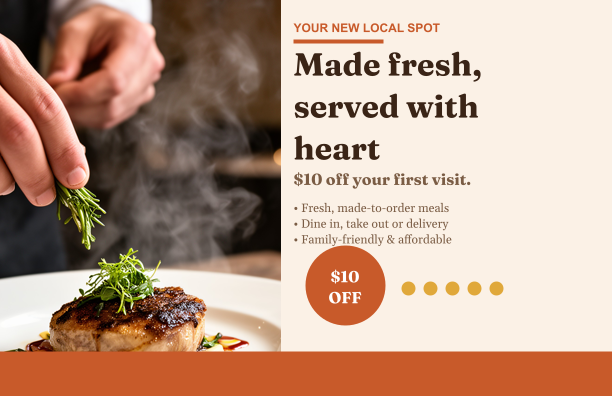
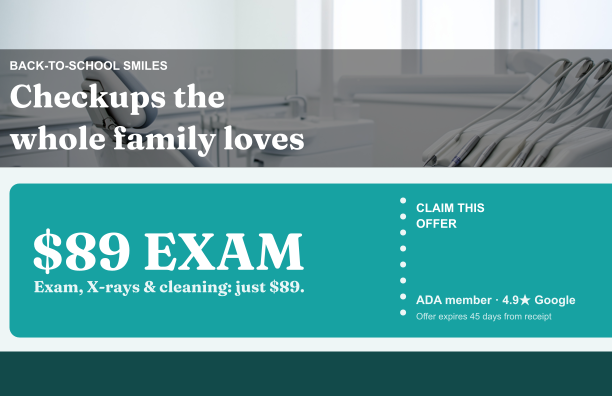
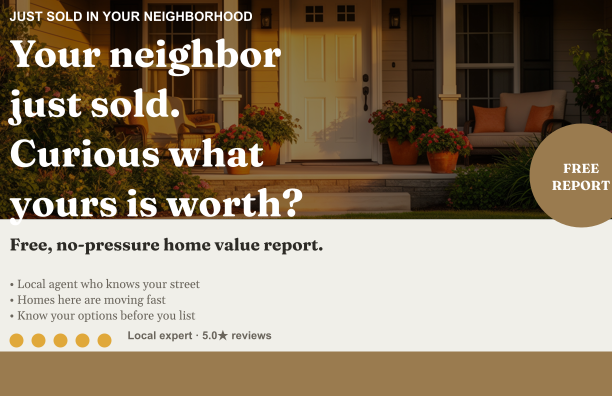
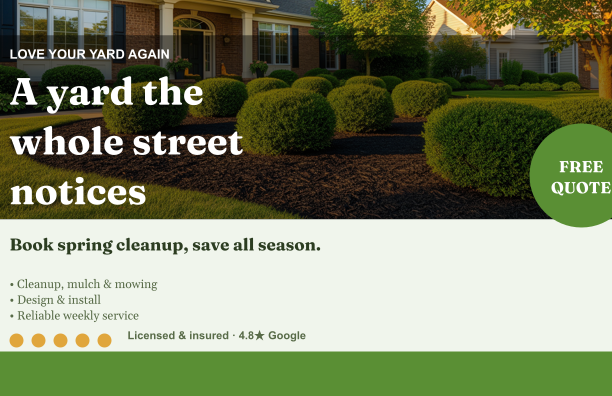
Our design studio includes 164 professional templates spanning every category we mail — 23 local-business categories from dental to restaurants to real estate — each sized 6.5 × 9 with the indicia corner reserved, and each editable in the browser. Swap in your logo, photo, offer, and colors and you're done — with no separate design fee the way print-and-mail shops charge one. Or bring your own finished design and we'll check it against spec.
Hire a designer when you need genuinely custom brand work — then hand them the spec above and mail the result through the same pipeline. If you're specifically designing business postcards, the layout principles are the same — one message, one offer, one response.
Postcard design ideas that actually pull response
The best postcard design ideas aren't about decoration — they're about giving the reader one reason to act. A few that consistently work for local businesses:
The single-offer card. One deadline-dated deal — “new-patient exam special, this month only” — as the biggest thing on the card. Specific beats clever.
The before/after. A split image showing the outcome of your service. Nothing sells a lawn service, a salon, or a remodeler like the result.
The just-listed / just-sold. For real estate, a photo of a nearby home and a one-line hook. The neighborhood recognizes the street.
The seasonal reminder. Timed to when the need arrives — furnace tune-ups before winter, gutter cleaning in fall — so the card lands the week people are already thinking about it.
You don't need a postcard-design maker or a stack of free templates off the internet that aren't sized for mailing — the size, bleed, and indicia have to be right or the mailing gets rejected. Starting from a template already built for the mailbox is faster than any blank-canvas maker and safer than a free download that was never made to print.
Postcard design FAQs
What are the rules for designing postcards?
Two sets of rules matter. Design rules: one headline, one image, one offer, one way to respond — a card is read in about two seconds, so anything past one clear message is noise. Postal rules: the artwork needs bleed (an eighth-inch past the trim), a safe margin that keeps text off the edge, and — for Every Door Direct Mail — a reserved corner for the postage indicia and the “ECRWSS / Local Postal Customer” line. Templates built for mailing bake the postal rules in so you only have to think about the message.
How can I create my own postcards?
The fastest path is to start from a template already sized to postal spec and make it yours: swap in your logo, photo, offer, and colors. Our design studio does exactly this in the browser — pick your business category, start from one of 164 professional templates, edit it, and it comes back print-ready with the postal spec already handled. You can also start from a blank card or upload a finished design.
Can AI design a postcard for me?
AI is good at generating imagery and first-draft copy, but a mailer that gets response still needs human judgment on the one message, the one offer, and a layout built to postal spec. The practical middle ground most local businesses land on: start from a proven, professionally designed template (the hard layout decisions already made) and customize it, rather than generating a card from scratch.
Is it legal to make your own postcards?
Yes — designing and mailing your own business postcards is completely standard. The only real constraints are postal, not legal: the piece has to meet USPS size and layout requirements for the class of mail you're using, and you can't imitate official government mail. Use your own artwork, photos you have the rights to, and your own offer, and you're fine.
What size should a marketing postcard be?
For Every Door Direct Mail (EDDM), the piece must be larger than a standard letter — taller than 6⅛ inches or longer than 11½ inches. A 6.5 × 9 inch postcard clears the EDDM Retail minimum, stands out in a stack of letter mail, and gives the design room for one big headline, one image, and one clear offer.
Do I need a designer to make a business postcard?
No. Professionally designed templates — already sized to postal spec, with the postage indicia area and address zones handled — let you swap in your logo, photo, offer, and colors in minutes. A designer is only worth it when you need fully custom brand work.
What is bleed on a postcard, and do I need it?
Bleed is the extra eighth-inch of artwork past the trim line so color runs to the very edge after cutting. Print-ready postcard files need bleed plus a safe margin that keeps text away from the trim. Templates built for print handle both automatically.
Where does the stamp or postage go on an EDDM postcard?
EDDM postcards don't use stamps. The printer imprints an indicia — a printed postage mark — plus the “ECRWSS / Local Postal Customer” line in a reserved corner of the card. Your design just needs to keep that corner clear, which sized-to-spec templates already do.
Should my postcard design include a QR code?
Yes — a QR code is the easiest way for a reader to respond and the easiest way for you to measure the campaign. Link it to a simple landing page with your offer, and you'll know exactly how many households scanned each mailing.
Skip the blank canvas
Pick a template already sized to postal spec, drop in your offer, and we handle printing, postage, and delivery to the neighborhoods that fit your business.